MRI scans could pave the way for radiation-free dental care
Meet Assistant Professor Jennifer Christensen, who is researching dental MRI and exploring how the technology can improve diagnostics and treatment without radiation.
MRI Instead of X-rays?
For decades, X-rays have been a staple tool in dental practice, but now an alternative technology is emerging. Assistant Professor Jennifer Christensen is conducting research into dental magnetic resonance imaging (ddMRI) and is working to identify where MRI offers the greatest value, and where X-rays remain the better option.
"MRI provides access to information that could change diagnoses and treatment plans for a large group of patients"
MRI scans are entirely free from radiation and can reveal soft tissues such as nerves and muscles, which are not visible on X-rays.
“In the future, we might be able to use MRI instead of X-rays in certain cases - for example, when a wisdom tooth needs to be removed. This would reduce radiation exposure for the patient and allow us to visualise nerves in the surgical area that we currently cannot see. MRI provides access to information that could change diagnoses and treatment plans for a large group of patients,” says Jennifer Christensen.
Better treatment for both children and adults
The researcher hopes that MRI can replace routine X-rays where it benefits the patient’s treatment pathway - particularly for children, who are at greater risk of radiation-related harm. She is also investigating how ddMRI can improve the treatment of apical periodontitis (inflammation around the tip of the root).
“An X-ray cannot show whether there is active inflammation in the tissue, or whether it’s scar tissue or something else that doesn’t require treatment. MRI might be able to provide us with more information in such cases. If we can perform more precise scans without radiation, that’s a win for both children and adults,” she says.
From dental chair to research
After completing her PhD in odontology in 2013, Jennifer Christensen spent several years working in clinical practice. She enjoyed the work but missed the research environment.
“I’m still grateful that someone nudged me back into research."
Through teaching at the School of Dentistry in Aarhus, she reconnected with former colleagues and seized the opportunity when a postdoctoral position became available.
“I’m still grateful that someone nudged me back into research. I had a good daily routine in the clinic, but I missed the depth and the chance to be part of developing something new,” she explains.
MRI as a Natural Part of the Dentist’s Toolkit
The aim of Jennifer Christensen’s research is for dentists in the future to be able to refer patients directly for MRI, and for training in the technology to become an integral part of dental education.
“It’s not about completely replacing X-rays, but about finding the best combination for the patient,” she says.
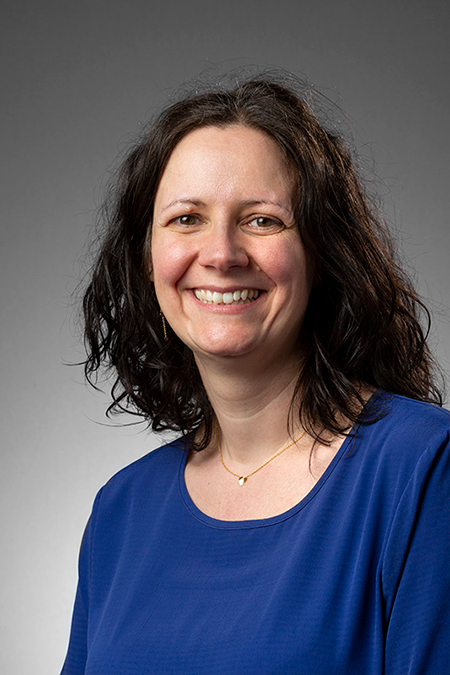
5 highlights about Jennifer Christensen
- PhD in Odontology (2013) with a focus on imaging diagnostics
- Researcher in the development and clinical application of dental MRI (ddMRI)
- Research projects on wisdom teeth, apical periodontitis, and children's experiences with MRI
- Lecturer at the School of Dentistry, Aarhus University
- Born in 1981